Ethereum Pulls Quantum-Safe Roadmap Forward to Target December 2028 Deadline
2 min read
Key Takeaways
- December 2028 remains an aspirational completion date, not a confirmed protocol deadline.
- The proposal concerns Ethereum’s core cryptographic infrastructure rather than a single wallet feature.
- Completing the transition would require changes to multiple network systems.
- The announcement does not establish a confirmed schedule for individual protocol upgrades.

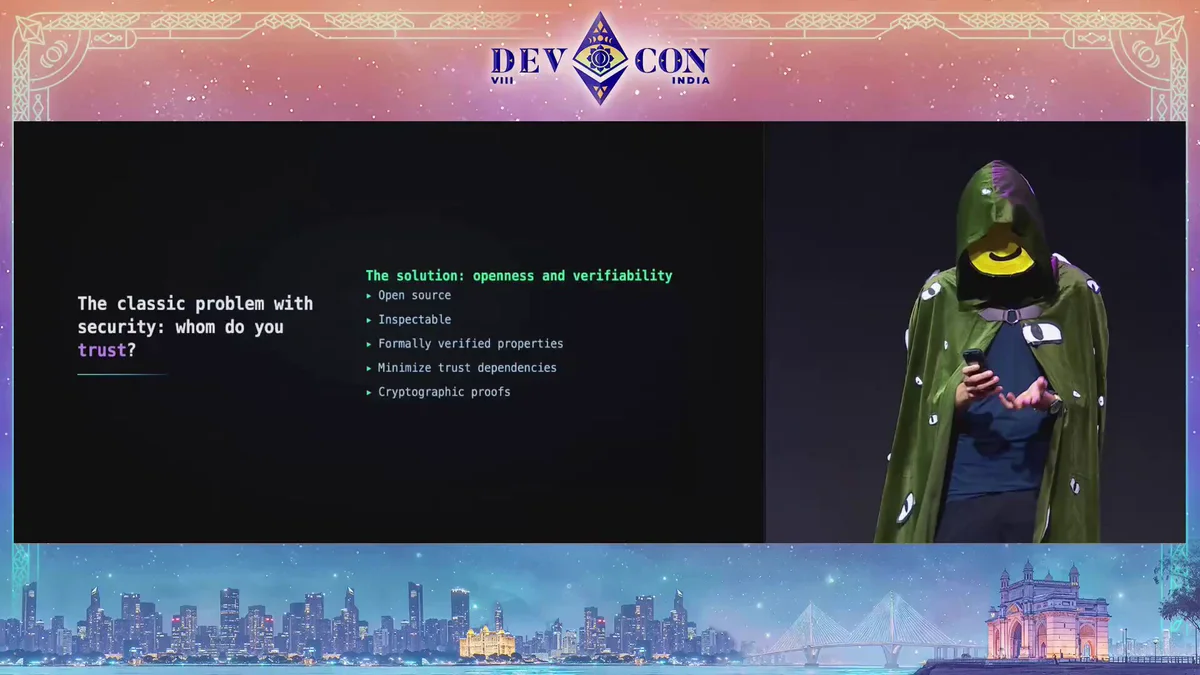
Ethereum Foundation researcher Justin Drake announced an accelerated goal for completing Ethereum’s post-quantum and post-AI transition by December 2028 at the Devcon 8 opening ceremony in Mumbai, India, on November 3, 2026.
Drake’s proposed timeline is one year earlier than the Foundation’s existing December 2029 quantum-resistance target, but does not formally replace that benchmark. The proposed timetable aims to accelerate Ethereum’s preparations for future threats from quantum computing.
The proposed transition addresses future quantum-computing threats rather than a demonstrated quantum attack on Ethereum.
Drake Outlines Accelerated Security Goal
Drake presented the accelerated completion date as a goal rather than a formally adopted network deadline.
The announcement marks a change in the Foundation’s proposed timetable for preparing Ethereum against future cryptographic threats. Its significance lies in bringing forward the intended completion of work affecting the network’s underlying security mechanisms.
Completing the proposed transition would require coordinated changes to Ethereum’s underlying cryptographic systems.
Implementation Across Ethereum’s Network
The announcement establishes an accelerated objective, but the supplied primary record does not establish which specific cryptographic replacements have been formally adopted.
Ethereum’s execution, consensus and data availability layers perform different roles in the network. Changes to their cryptographic mechanisms would therefore need to be assessed separately rather than treated as one interchangeable upgrade.
The proposed transition would require technical decisions about how Ethereum implements quantum-resistant cryptography without disrupting existing network operations.
Wallet authorisation presents a separate implementation consideration. Changes to how accounts approve transactions would need to be coordinated with the broader security transition, rather than assumed to follow automatically from the proposed completion date.
Remaining Decisions for Developers
The distinction between a researcher’s proposed target and an adopted protocol schedule matters because Ethereum upgrades require technical implementation and agreement before deployment.
For developers, the next substantive step is establishing which changes can be incorporated into future network upgrades and how their deployment would be coordinated. Drake’s announcement sets an earlier objective, but does not by itself confirm those implementation decisions.
Live Ethereum chart
Data: CoinGecko. Prices in USD.